
Software Consultants

Price the known work. Give discovery room to answer the unknowns.

Roadbase drafts phases, tasks, roles, hours, timing, and costs from a brief or PDF. Review the assumptions, separate discovery from delivery, and adjust the quote before it goes to the client.

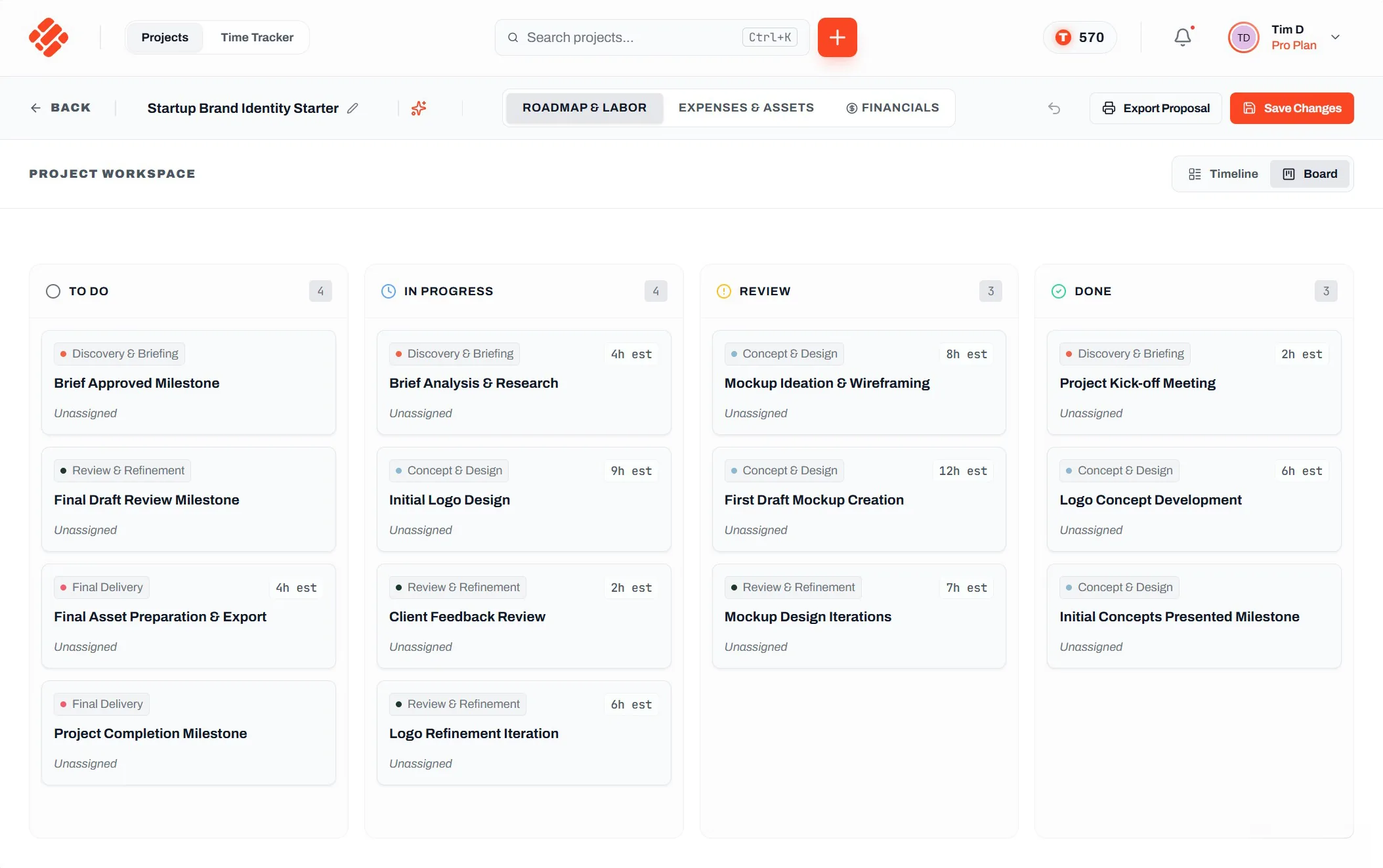
Roadbase agile Kanban Board
Discovery Separate research from delivery
Inputs Record assumptions & dependencies
Roles Plan specialist hours & rates
Actuals Track time against the estimate

UNCERTAINTY BEFORE DELIVERY

A software estimate should show what is known and what still needs investigation

Clients often want a firm price before anyone has inspected the legacy system, tested the third-party API, or agreed how an edge case should behave. The consultant's job is to make that uncertainty visible without turning the proposal into a technical essay.

Some work is ready to estimate: a defined workshop, an architecture review, or a known set of implementation tasks. Other work needs discovery before responsible delivery estimates are possible.

Treating both groups as equally certain hides the technical judgment the client is buying. It also makes it difficult to explain why new evidence changes the plan.

"A useful consulting estimate separates evidence-gathering from the delivery work that depends on what you find."

Roadbase drafts a first breakdown from the brief. You review the assumptions, dependencies, roles, hours, expenses, and contingency, then decide which items can be quoted now and which belong in discovery.

Roadbase Kanban project workspace
Move approved work into a simple Kanban workspace.
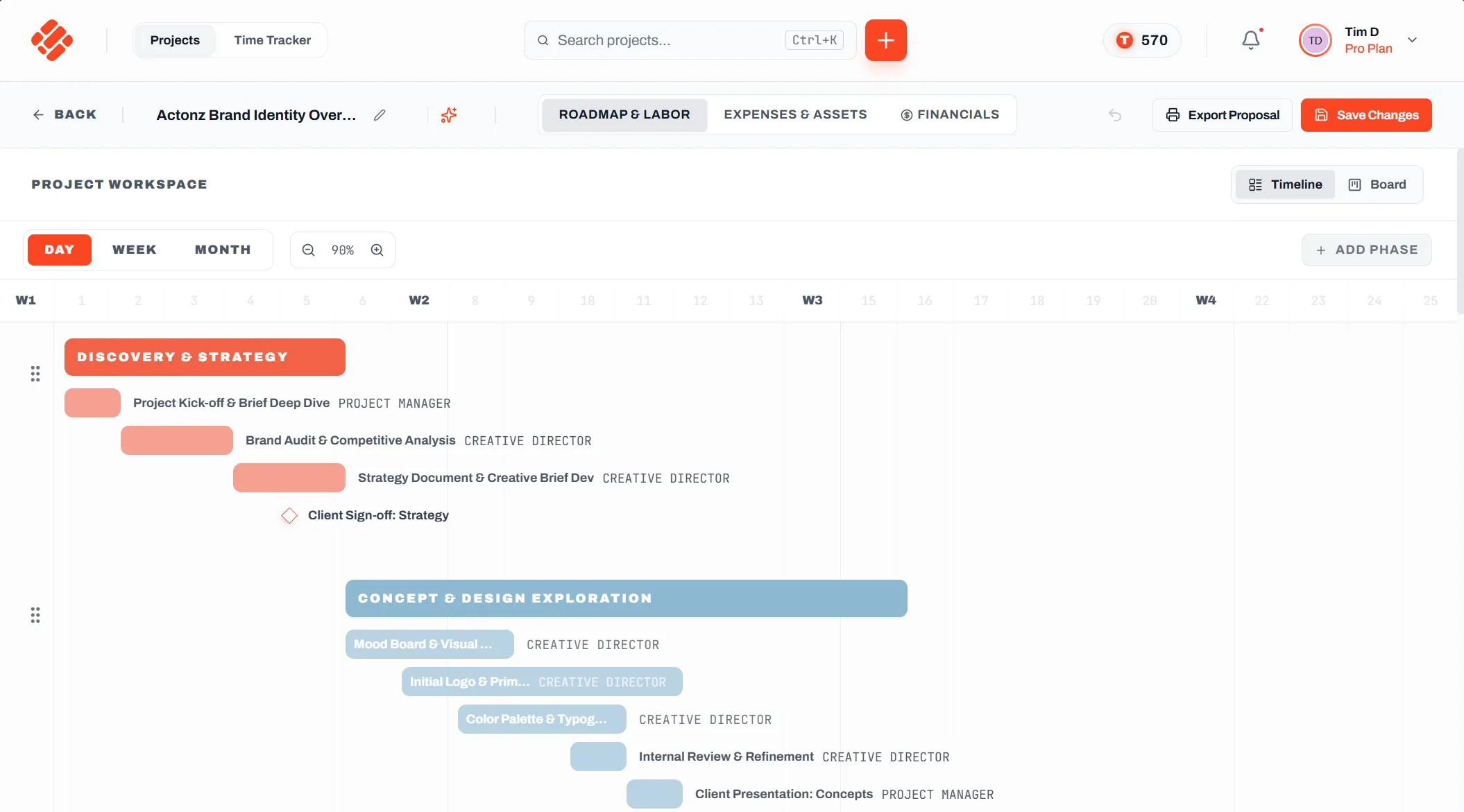
Roadbase interactive Gantt timeline workspace
Review phases, dependencies, and timing on the visual timeline.

A REVIEWABLE ESTIMATE

Three ways to make technical uncertainty explicit

These are practical patterns, not fixed rules. Use them where they help the client understand what the estimate does and does not assume.

"An estimate becomes easier to discuss when assumptions and dependencies sit next to the work that relies on them."

Separate discovery from delivery

Use a defined discovery phase when architecture, data quality, or integration behavior is still unclear. Its output should reduce uncertainty and provide evidence for the delivery plan that follows. For a practical way to turn uncertain requirements into deliverables and assumptions, read our guide to turning a brief into a scope of work.

Estimate the roles the work needs

Architecture, backend engineering, security review, and QA may carry different rates and hour estimates. Showing those roles makes the cost model easier to review. The out-of-scope calculator can help assess unplanned work on a previous engagement.

Tie contingency to named unknowns

If an external API, legacy system, or client-supplied dataset creates uncertainty, name it. Add a contingency that fits the evidence you have instead of applying a universal percentage. See our guide to turning incomplete requirements into a reviewable quote.

TECHNICAL ESTIMATE

Example estimate with discovery and integration risk separated

This illustrative $45,100 estimate shows how technical discovery, known delivery work, and a named integration contingency can appear as separate lines.

Project Milestone Engineering Scope Target Hours & Team Roles Total Pricing
01. Technical Discovery & Architecture Current-system review, database model, infrastructure plan, and key assumptions. 20 hrs Principal Architect @ $200/hr
30 hrs Senior DevOps @ $150/hr
$8,500.00
02. API & Backend Services FastAPI routes, authentication, encryption, and Stripe payment webhook. 60 hrs Backend Engineer @ $150/hr
20 hrs Lead QA @ $120/hr
$11,400.00
03. Front-End Dashboard React application, responsive interface, and chart data integration. 80 hrs Frontend Engineer @ $150/hr
30 hrs UX Lead @ $160/hr
$16,800.00
04. Legacy Integration Contingency Allowance for uncertainty in the documented Salesforce synchronization. 30 hrs Backend Engineer @ $150/hr $4,500.00
05. End-to-End Testing & Handoff Integration testing, Cypress automation, staging deployment, and technical notes. 20 hrs QA @ $120/hr
10 hrs DevOps @ $150/hr
$3,900.00
"The estimate makes a useful trade-off visible: reduce delivery work, fund more discovery, or change the budget with the assumptions in view."

Read how to keep the plan and quote connected as assumptions change.

ROADBASE FEATURES

Turn technical judgment into a quote the client can review

Roadbase supplies the first draft and the connected cost model. Your team supplies the technical judgment and decides what belongs in the final proposal.

Draft the first breakdown

Paste requirements or upload a PDF. Roadbase drafts a name, summary, phases, tasks, roles, estimates, timing, and reasoning for your team to review.

Review the timeline

Move phases and tasks on a visual timeline. Adjust the planned hours and timing as discovery changes what the team knows.

Build the financial model

Set role rates, labor costs, overhead, expenses, contingency, and target margin. Review the resulting quote and profit model before exporting the PDF.

Compare the estimate with delivery

Run approved tasks in the Kanban workspace, keep notes and comments with the work, and track actual hours against the estimate.

Make the unknowns visible before you price the delivery work.

Start with the requirements, review the draft phases and assumptions, then set the roles, contingency, and quote that fit the evidence you have.