ONE PRODUCTION, TWO COST MODELS
Shoot costs and post-production hours need different treatment
A video budget combines fixed bookings with time-based creative work. Crew, camera packages, locations, travel, talent, and licenses sit alongside editing, color, sound, motion, review rounds, and versioning.
Those categories change in different ways. An extra shoot day affects the crew and equipment plan. A new 9:16 cutdown affects post-production. A music change may affect both edit time and licensing.
When the quote reduces all of that to "production and post," it is hard for the client or producer to see what has been allowed for. Named deliverables, ratios, cut lengths, licenses, and feedback rounds make the estimate much easier to review.
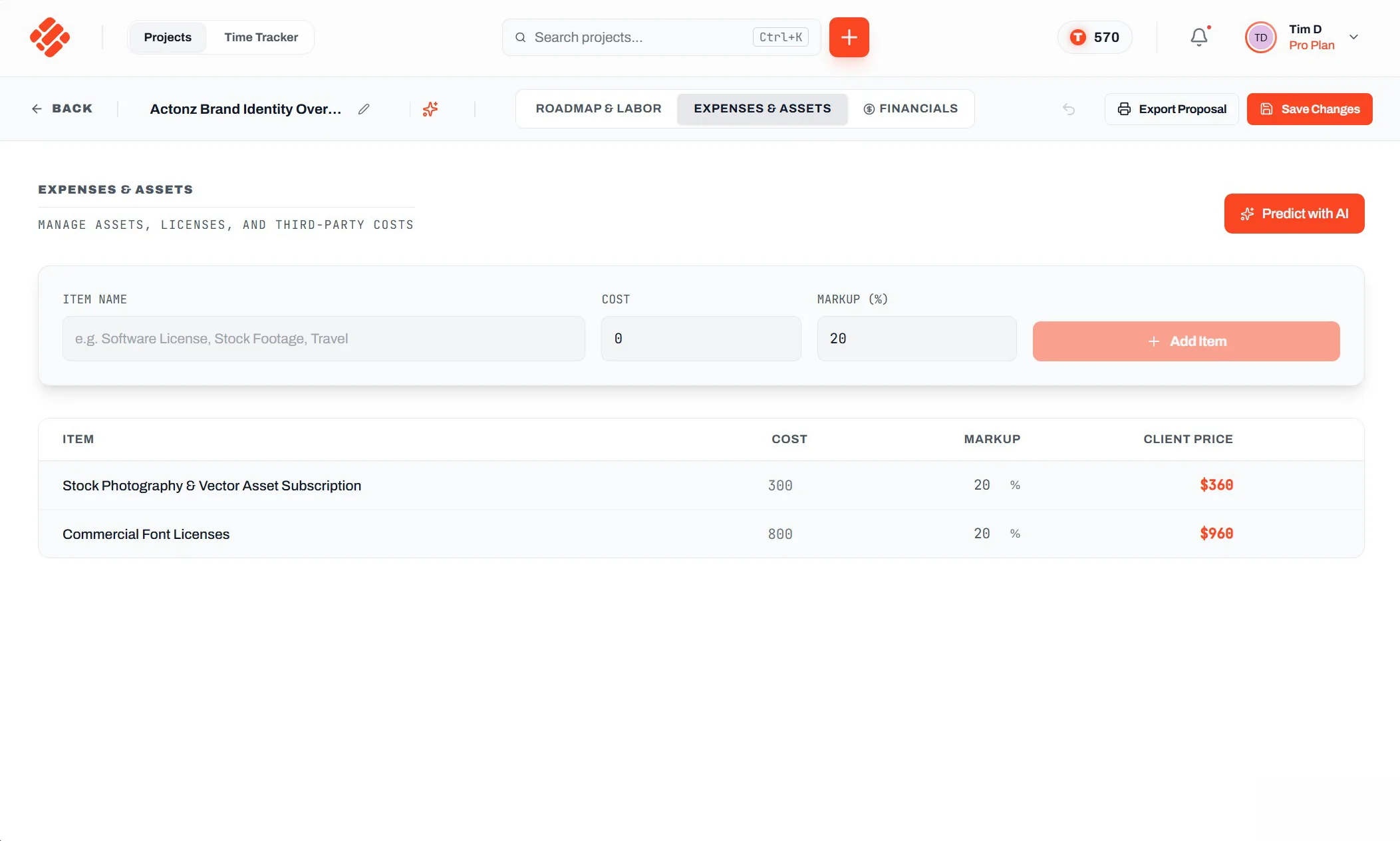
Roadbase drafts the first set of phases, tasks, roles, hours, timing, costs, and assumptions from the brief. The producer reviews those suggestions and adds the real vendor quotes, rates, and contingency before exporting the proposal.