

Productive Alternatives for Creative Freelancers: A Pre-Approval Evaluation Guide
Searching for Productive alternatives can mean several things. You may be weighing a broad platform for work after approval. Or: can this client brief become a project plan and quote worth reviewing?
Those are different jobs. This guide is for the second. Use one live creative brief to inspect planning, pricing review, proposal output, and follow-through after approval. The result should clarify what your workflow needs to do.
Table of Contents
- Why do creative freelancers look for Productive alternatives before approving a new platform?
- What should you prioritize when evaluating Productive alternatives?
- How does AI-assisted planning and pricing help, and where does it fall short?
- When does a quote-first workspace belong in your evaluation?
- How to run a one-project evaluation before changing your workflow
- How should you judge the value of a new planning workflow?
- Key Takeaways
- The pre-approval question is whether the workflow makes the next decision clearer
- Use one real brief to test a reviewable Roadbase workflow
- Useful sources
- FAQ
Why do creative freelancers look for Productive alternatives before approving a new platform?
A search for Productive.io alternatives is often too early for a feature checklist. Name the decision that currently feels unreliable. An events brief may name a venue but leave physical outputs, supplier coordination, and install responsibilities unsettled. A brand project may have direction but no settled approval route.
The question is whether your information can become a reviewable plan without hiding missing decisions. A planning workflow is useful when it exposes assumptions and lets you inspect the commercial logic before approval.
Write down the next decision slowing the quote down: design routes, QA ownership, supplier-coordination hours, or direct costs outside labor. That is the decision to test.

What should you prioritize when evaluating Productive alternatives?
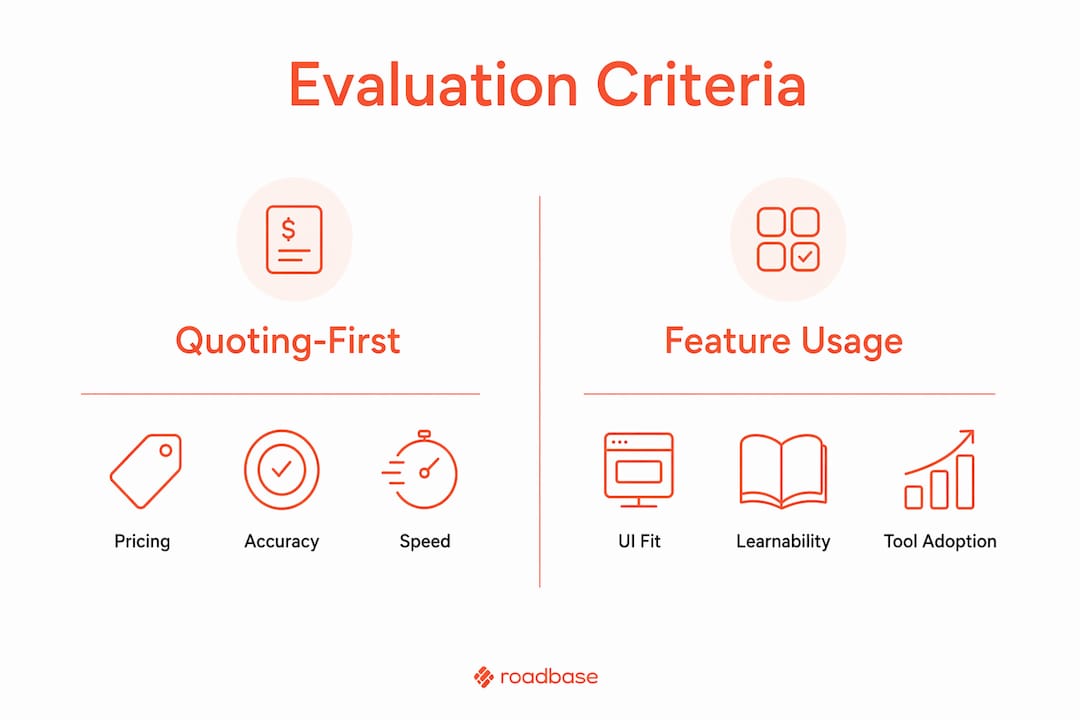
For a pre-approval test, concentrate on evidence you can inspect in one real project. The sheet keeps the test tied to decisions a creative freelancer can actually review.
| Decision to test | Evidence to inspect | What a good answer looks like |
|---|---|---|
| Brief completeness and constraints | The client brief, its omissions, and explicit budget, deadline, review-round, or exclusion wording | You can see what is stated, what needs clarification, and what assumptions you must add. |
| Editable work breakdown | Phases, tasks, milestones, role assignments, and estimated hours in a draft | The draft gives you a starting structure you can revise rather than a result you feel pressured to accept. |
| Role-hour pricing | The role assigned to each task, its estimated hours, and the rates you maintain | You can check whether the people doing the work and the hours behind it make sense. |
| Cost assumptions | Labor, overhead, direct costs, contingency, and target margin | The numbers are visible for review and can be corrected before the quote goes out. |
| Reviewed proposal output | The project summary, roadmap, deliverables, and cost breakdown | You can read the proposal as a client-facing document before exporting it. |
| Simple post-approval status and time | Project/task status, task detail, tracked hours, and estimated hours | You can keep approved work connected to updates and see estimate variance while it is underway. |
| Repeatable starting structure | A previous project structure that resembles the new job | You can reuse it as a starting point, then review it for the current brief. |
This is more useful than asking which alternative productivity methods seem appealing in the abstract. For someone comparing the best alternatives for productivity, an event studio might need to separate concept, spatial development, production coordination, artwork, and install support. Inspect whether the workflow makes that hidden work visible.
How does AI-assisted planning and pricing help, and where does it fall short?
AI can be useful when a brief needs shape. In Roadbase, you can paste the brief or attach a PDF, and Roadbase builds an editable first draft of the work breakdown. It can give you phases, tasks or milestones, roles, and estimated hours to discuss. It is a draft to review and adjust, not a finished scope or a correct estimate.
Review still matters. Explicit constraints can be carried into the draft for review, but that depends on the brief's wording. If the client says "two review rounds" or "exclude copywriting," check it in the draft. Add an assumption or ask for clarification when the brief leaves out decision-makers, variants, delivery format, or supplier boundaries.
Pricing needs the same discipline. You can price estimated hours by the roles doing the work, but you supply and maintain costs and billable rates. Review labor, overhead, direct costs, contingency, and target margin behind the quote. This makes the numbers visible together; it is not financial advice or a profitability guarantee.
Alternative productivity methods that treat AI as a draft-and-review step are safer than hands-off use. Compare the draft with your experience, current brief, exclusions, and the feasibility of each phase. If relevant records suggest different role hours, change the draft.
When does a quote-first workspace belong in your evaluation?
A quote-first workspace belongs in the evaluation when the main uncertainty is upstream: what work is included, who will do it, how much time each part needs, and what needs review before a proposal is shared. Roadbase is a planning and pricing workspace for that narrower moment, not a broad all-purpose platform.
Use one real brief to inspect the path. Paste the brief or attach a PDF. Review the editable work-breakdown draft. Check the explicit constraints that the brief actually states. Price estimated hours by the roles doing the work, using costs and rates you have supplied. Then review labor, overhead, direct costs, contingency, and target margin behind the quote before exporting the reviewed plan and quote as a proposal PDF.
A proposal PDF is not an e-signature workflow, contract, legal advice, or automatic approval system. Roadbase is also not the right answer when the central need is accounting, invoicing, CRM, enterprise resource planning, portfolio workload management, or a client portal. In those cases, the one-brief test has shown that you need a different workflow.
For a closer look at the pre-approval job itself, see From messy brief to clean quote - Roadbase Blog and How to turn a creative brief into a scope of work and quote - Roadbase Blog.
How to run a one-project evaluation before changing your workflow
Keep the test small. Choose a current brief with enough ambiguity to be useful. You are assessing a reviewable plan and quote, not moving a whole operating system.
Start with the material you actually received. Use the client notes, pasted brief, or PDF. Mark the decisions that are clear and the ones you need to ask about, such as a revision boundary, usage assumption, specialist handoff, or direct cost.
Generate, then inspect the draft. Review the proposed phases, tasks, roles, and estimated hours against the work you believe is required. Adjust any task that is too broad, missing, or assigned to the wrong role. A draft earns trust only after this review.
Review the commercial inputs. Check the roles, their hours, your maintained cost and rate inputs, plus labor, overhead, direct costs, contingency, and target margin. Record the assumptions you made so they are visible when the quote is discussed.
Read the output before you send it. Export the reviewed plan and quote as a proposal PDF, then read the project summary, roadmap, deliverables, and cost breakdown as the client will see them. It is an output to review, not a contract or automatic approval route.
If the work is approved, ask whether the same project can continue without rebuilding it. Roadbase can carry it into a simple status board, keep task detail and updates with the work, and track time against a project or task. Compare tracked hours with the estimate while work is underway. That makes variance visible; it does not prevent overruns or scope creep.
How should you judge the value of a new planning workflow?
Do not treat a one-project evaluation as proof of return on investment. The immediate value is evidence: did the brief reveal gaps, did the work breakdown give you something worth editing, and did the pricing review make assumptions visible enough to discuss?
Keep a short evidence log: missing inputs, changed phases or roles, cost assumptions that needed a decision, and proposal edits. This shows where your process relies on memory, a spreadsheet, or a late conversation, and where a workflow created work rather than clarifying it.
On active or completed projects, past estimate-versus-actual data can inform a later draft by role. That needs sufficient relevant, correctly linked time data; it is not automatic learning or a promise of better estimates. You can reuse a previous project structure as a starting point, but it still needs review for the new brief.
Efficient substitutes are therefore the ones that leave you with better evidence about the decision in front of you. They are not the ones with a prewritten business case.
Key Takeaways
- Use the Productive alternatives search as a prompt to define the pre-approval decision you need to make, not as a reason to force a platform ranking.
- Test one current creative brief. Inspect missing inputs, explicit constraints, the editable work breakdown, role-hour logic, and the reviewed proposal output.
- Treat AI as a draft to review and adjust. It does not replace judgment about exclusions, feasibility, costs, rates, or client expectations.
- A quote-first workspace can be relevant when planning and pricing are the uncertain part before approval. It is not a substitute for accounting, invoicing, CRM, ERP, capacity planning, or a broad operations platform.
- If work continues after approval, inspect the limited follow-through you need: simple statuses, task detail, time tracking, and visible estimate variance.
The pre-approval question is whether the workflow makes the next decision clearer
Creative work often begins with partial information. A brief can be directionally clear while production details, review route, specialist costs, or delivery boundaries still need attention. The problem is not needing to edit a plan; it is letting edits and assumptions stay hidden until after a quote has shaped the client's expectation.
A good evaluation keeps those choices visible: turn notes into a draft, review work-breakdown and pricing inputs, and decide what needs clarification before sharing the proposal. A broad post-approval need calls for a different assessment from a quote-first planning problem.
Use one real brief to test a reviewable Roadbase workflow
If you have a real brief, notes, or PDF and need a reviewable project plan and quote, Roadbase is worth including in your evaluation. Paste the brief or attach a PDF, then review the editable draft: adjust phases, tasks, roles, hours, assumptions, costs, and the proposal before export. Use the main Roadbase platform only for that bounded test, not as a promise of a broader operations system.
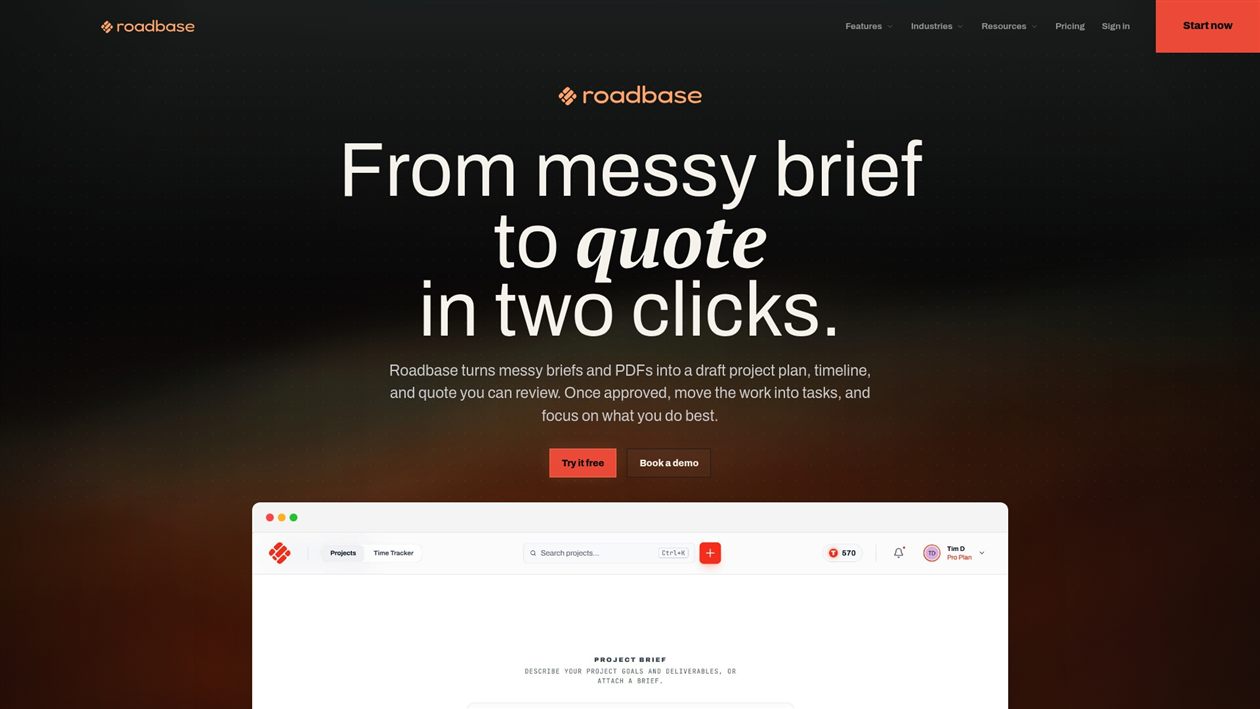
After approval, you can carry the project into a simple status board and compare tracked hours with the estimate. That may be enough continuity for the job at hand; it does not turn Roadbase into a full resource-planning or financial system. For a creative-freelancer context, see Freelancer Project Estimates & Quotes | Roadbase. These are productive options for work when the immediate need is a better-reviewed quote, not a broad-platform verdict.
Useful sources
The following imported references are retained as reading inventory. They do not support the product, switching, or outcome claims in this guide.
- Analysts at The Digital Project Manager
- Best Productive.io Alternatives for Agencies (2026) - Workamajig
- Roadbase: Freelancer Project Estimates & Quotes
- Roadbase vs monday.com - Roadbase Blog
- From messy brief to clean quote - Roadbase Blog
- Real-time multilingual project management
Recommended
- Roadbase vs Teamwork: which is better for creative quotes and client delivery? - Roadbase Blog
- Roadbase vs Dubsado: which is better for quoting and delivering creative projects? - Roadbase Blog
- Freelancer Project Estimates & Quotes | Roadbase
- How to turn a creative brief into a scope of work and quote - Roadbase Blog
- Quoting-first vs. board-centric workflows
FAQ
What should I test before changing tools?
Test one current brief from the material you actually received. Inspect what is missing, whether explicit constraints are visible for review, whether the work breakdown is editable, whether roles and hours make sense, and whether you can review the proposal output before sharing it. Do not treat one test as proof that a new workflow will solve every later operating problem.
Can an AI draft replace review?
No. An AI result is a draft to review and adjust. Check the stated constraints, assumptions, exclusions, phases, tasks, roles, estimated hours, maintained cost and rate inputs, and feasibility. AI can provide a starting structure; it cannot make commercial or delivery judgment for you.
What should a creative brief test include?
Choose a brief with real decisions still in it: deliverables, variants, approval rounds, client-supplied material, specialist work, direct costs, and handoff boundaries. The purpose is to see whether the workflow exposes the questions you need to settle before approving the project.
Is proposal PDF output the same as a contract?
No. A reviewed Roadbase plan and quote can be exported as a proposal PDF. It is not an e-signature workflow, a legal agreement, legal advice, or an automatic approval system. Handle those needs through the appropriate process.
What should I track after approval?
Track the project or task status, task detail and updates, and the actual hours recorded against estimated hours. This can make variance visible while work is underway. It does not prevent overruns or scope creep. For freelancers looking for ways to increase productivity, the useful habit is reviewing that evidence before the next comparable quote, rather than assuming a tool will correct it automatically.