

Milestones and Deliverables: Templates for Project Managers
A deliverable is the work someone can inspect. A milestone is the meaningful point in the project that tells people where things stand. Mixing the two makes a project update vague: a date can look healthy while the actual output is still unclear.
For a creative freelancer or studio, the useful move is small. Keep one record for the output and one row for the review point. That gives the client something concrete to discuss before the quote is treated as ready.
Table of contents
- What milestones and deliverables actually mean in project management
- How milestones compare to deliverables: a quick reference
- What milestones and deliverables look like across industries
- How to set effective project milestones
- How to write high-quality deliverable statements
- How to map deliverables and milestones into your project plan
- Practical patterns for tracking and reporting progress
- Common mistakes and how to fix them fast
- Ready-to-use templates and tool notes for project managers
- How to handle changes to milestones and deliverables during execution
- The role of stakeholders in approving and validating milestones and deliverables
- Best practices for communicating status to your team and clients
- An editorial perspective on what most teams get wrong
- Turn your brief into a plan, price, and proposal
- Sources
- FAQ
What milestones and deliverables actually mean in project management
The PMI Lexicon of Project Management Terms, Version 5.0 describes a milestone as a significant point or event in a project and a deliverable more broadly as a unique, verifiable product, result, or service capability. In plain terms, the deliverable is the thing being produced; the milestone is the point worth reporting.
Neither label replaces a task. Tasks are the work that moves an output forward. A concept deck, for example, may take research, design, and revision tasks to produce. The deck is the deliverable. A review point such as "concept direction reviewed" can be the milestone.

How milestones compare to deliverables: a quick reference
| Question | Deliverable | Milestone |
|---|---|---|
| What does it describe? | A product, result, or service capability to review. | A significant point or event in the project. |
| What does it help a team discuss? | What is included, what is still open, and what needs review. | Whether an important point in the plan has been reached or needs attention. |
| What should the record contain? | A clear description, boundaries, format, and assumptions. | A name, date or forecast, status, and the next decision. |
| What should it not imply? | That every output is a file, or that it is automatically accepted. | That it creates a contractual trigger or proves the work is complete. |
The distinction is useful even when the two are related. A production-artwork pack can be a deliverable, while a planned review of that pack is a milestone. The record should show both without pretending that the review itself settles a commercial or legal question.
For a plain-language companion reading, Milestone Vs Deliverable | PM Study Circle is retained as further reading only.
What milestones and deliverables look like across industries
Take a packaging project with several product variants. The outputs might include a system concept, a rollout list, and production artwork. Useful milestones might mark the planned concept review, the point when rollout inputs are complete, and the planned handover of artwork.
Those are examples, not an industry standard. A project with unsettled copy, missing dielines, or a late printer decision needs its assumptions written beside the deliverable. The milestone row can then make the next decision visible without claiming that the plan controls every dependency.
How to set effective project milestones
Pick milestones that help people make a decision or notice a real change in the plan. Avoid turning every activity into a milestone. "Explore concepts" is work; "concept direction reviewed" is a clearer point to report.
Before adding a milestone, ask:
- What part of the project will be different at this point?
- Which deliverable or decision gives the update meaning?
- What assumption could move the date or forecast?
- What is the next decision if the point is at risk?
This is planning guidance, not a rule that every project needs the same number of milestones or a formal approval at each one.
For another further-reading perspective, see Milestones, Deliverables, and Tasks: What's the Difference, Really.
How to write high-quality deliverable statements
Write the deliverable so a reader can see its edges. The record does not need legal language; it needs enough detail for the team and client to review the work sensibly.
| Field | What to record |
|---|---|
| Deliverable | A short name for the output or result. |
| Includes | The parts the team expects to produce. |
| Excludes or depends on | Inputs, decisions, or work outside the current plan. |
| Format | The expected form, such as a presentation, artwork pack, or workshop summary. |
| Review point | The planned conversation or check connected to the work. |
| Estimate note | The assumption that most affects the hours or cost. |
This is a planning record, not a substitute for acceptance criteria, a contract, or an organization's required sign-off process.
How to map deliverables and milestones into your project plan
Start by naming the outputs and the work needed to produce them. A creative project work breakdown structure is the better place to learn that fuller process. The NASA Work Breakdown Structure Handbook supports using a WBS as a framework and common reference for project elements and communication. Then add only the review points that help the project stay legible.
Before sending a quote, compare the two records with the estimate. The output record shows what the hours are intended to cover; the milestone row shows where a decision or review could change the forecast. For a fuller estimating pass, see how to estimate project hours before you send a quote.
Practical patterns for tracking and reporting progress
A short status view can keep timing and substance separate:
| Milestone | Forecast | Status | Linked deliverable | What is known now | Next decision |
|---|---|---|---|---|---|
| Concept direction reviewed | 14 May | Needs review | Packaging system concept | Two routes are ready; copy remains provisional. | Confirm which route moves into rollout. |
The point is not to simulate certainty. It is to show the current forecast, the output behind it, and what must happen next. A weekly team update may need more detail than a client summary; choose the record that helps the reader act.
For a separate comparison to browse after this guide, see Milestone vs. Deliverable: What's the Difference?.
Common mistakes and how to fix them fast
- Calling an activity a milestone. Rewrite it as the significant point the activity is meant to reach.
- Calling a vague promise a deliverable. Name the output, its boundaries, and the assumption that could change it.
- Treating a planned date as proof that the estimate is sound. Recheck the work, inputs, and assumptions behind the forecast.
- Using the records as a substitute for commercial terms. Keep contractual, payment, and formal approval requirements in the appropriate process.
Ready-to-use templates and tool notes for project managers
Use these as lightweight starting points, then adapt them to the project and the organization's process.
Deliverable record
Deliverable:
Includes:
Excludes or depends on:
Format:
Planned review point:
Estimate note:
Milestone status row
Milestone:
Planned date:
Current forecast:
Status:
Linked deliverable:
What changed:
Next decision:
For a broader look at project-management options, the retained reading links on Wrike alternatives for project managers and Roadbase vs monday.com may be useful. They are not a replacement for checking a tool against the needs of a particular project.
How to handle changes to milestones and deliverables during execution
When an output changes, update its record first: what is now included, what input changed, and what estimate assumption has moved. Then revisit the related milestone row. That separates a change in the work from a change in the forecast.
If the change affects a contract, regulated approval, invoice, or payment arrangement, use the organization's approved process and obtain appropriate advice. A project-plan row is not an authorization by itself.
The role of stakeholders in approving and validating milestones and deliverables
The record should make the expected review clear enough that nobody has to guess what happens next. It can name the person or group expected to respond and the question they need to answer, while leaving formal approval requirements to the relevant agreement or policy.

For a creative project, that may mean noting that the client is reviewing the selected concept route and that production artwork cannot sensibly proceed until the route is chosen. It does not mean an email, a status update, or a planned milestone automatically creates legal acceptance.
Best practices for communicating status to your team and clients
Give the team the detail it needs to do the next piece of work. Give the client the short view it needs to make the next decision. In both cases, say what the output is, where the forecast stands, and what remains uncertain.
Avoid reporting a milestone as if it were a binding approval or a payment trigger unless the appropriate contract and process say so. The useful status report is honest about the current project record, not overconfident about what it proves.
An editorial perspective on what most teams get wrong
The problem is often not that a project lacks a schedule. It is that the schedule and the promised output live in different conversations. One person talks about a date, another talks about a deck or artwork pack, and neither record says what must be decided next.
Two small records reduce that gap. They do not make an estimate accurate, stop scope changes, replace a contract, or schedule dependencies. They make the work and the next review point easier to inspect before a quote creates false confidence.
Turn your brief into a plan, price, and proposal
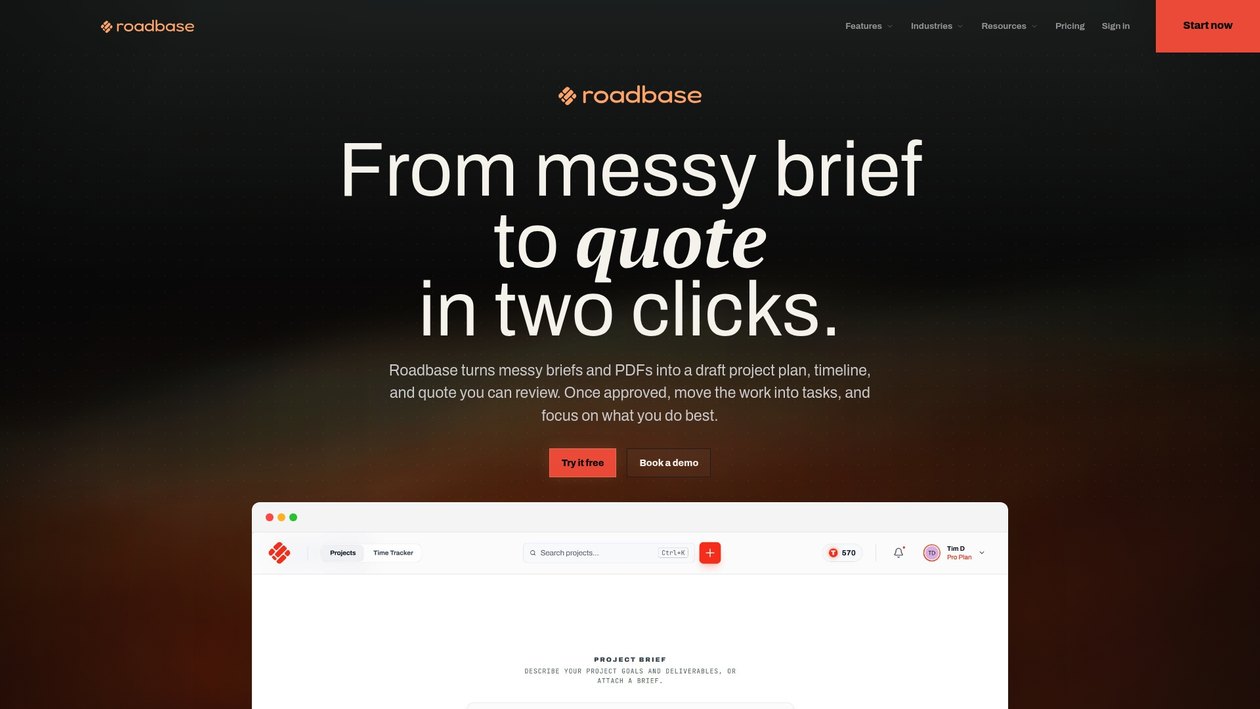
Paste your brief or upload a PDF. Roadbase builds an editable first draft with phases, tasks, milestones, roles, hours, timing, and estimate reasoning.
Shape the plan visually, adjust the assumptions and price, then export a proposal PDF when it’s ready to send. You stay in control of the final scope and quote.
Build your first quote in Roadbase →
Sources
The following imported links are retained as further reading only; they do not support the article's substantive claims.
- Milestone Vs Deliverable | PM Study Circle
- Milestones, Deliverables, and Tasks: What's the Difference, Really
- Milestone vs. Deliverable: What's the Difference?
- Practitioner guidance
- Deliverables registry
FAQ
Are deliverables and milestones the same thing?
No. A deliverable is a unique, verifiable product, result, or service capability. A milestone is a significant point or event in the project. They can be related without being interchangeable.
What is an example of a project deliverable and a milestone?
In a packaging project, a system concept can be the deliverable and a planned concept review can be the milestone. The record should also show the inputs and decisions that could change the forecast.
What are some examples of project deliverables?
Examples include a concept deck, a rollout list, a production-artwork pack, a workshop summary, or a project plan. The right definition depends on the work the team has agreed to review.
What are the key deliverables in a typical project?
There is no universal list. Start with the outputs the project actually needs, then record their boundaries, dependencies, and estimate assumptions. A work breakdown can help make that list concrete.
How does milestone-based billing work?
This article does not prescribe billing triggers. A milestone or deliverable record can help a team discuss the work and forecast, but payment terms and approvals belong in the relevant agreement and approved process.