

Roadbase AI Tokens for Agencies: Plan Your Usage (Pilot 5-10 Briefs)
Roadbase tokens make it straightforward to plan the AI actions your team wants to use. Each plan has a monthly token allowance, and unused tokens roll over from the previous month. A brief-to-project generation uses 10 tokens and gives you an editable draft to review and adjust. A separate AI expense run uses 5 additional tokens when that reviewed suggestion would be useful.
Start with a small set of real briefs. Choose the AI actions that help, build other plans manually or by duplicating and editing an existing plan, and top up independently if you want more AI actions. The allowance varies by plan, and every plan is designed to have enough tokens for the month.
TL;DR:
- Each plan includes a monthly token allowance, with unused tokens rolling over from the previous month.
- A brief-to-project generation costs 10 tokens and creates an editable draft to review and adjust.
- A separate AI expense run costs 5 additional tokens.
- Either AI action can be repeated while your balance remains, and tokens can be topped up independently when needed.
- Manual planning and duplicating and editing an existing plan are token-free.
Table of Contents
- What Are AI Tokens in Roadbase and How Do They Work?
- What Actually Drives Your Token Consumption?
- How Do You Forecast Your Token Needs?
- How Do You Keep Token Spend From Eroding Your Margins?
- How Roadbase Uses Tokens in Your Proposal Workflow
- Tokens Are a Capacity Lever, Not Just a Line Item
- Start a Small Token Pilot Before You Scale
- Sources
- FAQ
What Are AI Tokens in Roadbase and How Do They Work?
Roadbase tokens are the units used for two AI actions in the planning workflow. Each plan has a monthly allowance, and unused tokens roll over from the previous month. The allowance varies by plan.
One brief-to-project generation uses exactly 10 tokens. It turns a brief into an editable work-breakdown draft that you review and adjust. An AI expense run is separate: it uses 5 additional tokens for reviewed expense suggestions. Either action can be used again while your balance remains.
The wording around AI credits differs across products; this companion overview of credit systems is retained as background reading. For Roadbase, the useful planning numbers are fixed: 10 tokens for a generation and 5 additional tokens for an AI expense run. Microsoft's companion capacity-credit material is also retained for general reading.
Tokens can be topped up independently when needed. You can also plan manually, or duplicate and edit an existing plan, without using tokens.
What Actually Drives Your Token Consumption?
Only the AI actions use tokens. A brief-to-project generation costs 10 tokens. An AI expense run costs 5 additional tokens. If you choose either action again, it uses the same fixed amount while your balance remains.
That makes a simple planning routine possible:
- Choose a fresh brief when an editable AI draft would be helpful.
- Add the separate AI expense run when you want reviewed expense suggestions.
- Build the plan manually when that suits the work.
- Duplicate and edit an existing plan when you have a useful starting point.
The first two choices use tokens; the manual and duplicate-and-edit routes do not. For a general discussion of planning AI-credit use, this companion article remains available as further reading.
How Do You Forecast Your Token Needs?
Use a 5-10 brief pilot to plan usage. Pick representative briefs and decide which ones you want to generate as editable Roadbase drafts. Count 10 tokens for each chosen brief-to-project generation. Add 5 tokens for each chosen AI expense run.
For example, five chosen generations use 50 tokens. If you also choose the AI expense run for two of those projects, add 10 tokens. Use the pilot as a simple planning exercise for your team's chosen actions.
As you review the pilot, keep the options open. A brief can be planned manually, and a plan you have already built can be duplicated and edited without tokens. When you want additional AI actions beyond the available balance, tokens can be topped up independently. The monthly allowance varies by plan, with unused tokens rolling over from the previous month.
For additional background on pilot planning, this companion article is retained as further reading.
How Do You Keep Token Spend From Eroding Your Margins?
Keep the decision practical. Use a fresh AI draft when an editable work breakdown would be useful. Use the separate AI expense run when reviewed expense suggestions would help. For other work, build the plan manually or duplicate and edit a plan you already have.
If you want to think through the work behind a quote, review role costs and hours alongside the quote inputs. The AI draft and AI expense suggestions are still material for review and adjustment. This companion planning article is retained as general reading.
When more AI actions would be useful, top up independently. The monthly allowance varies by plan, unused tokens roll over from the previous month, and each plan is designed to have enough tokens for the month.
How Roadbase Uses Tokens in Your Proposal Workflow
Roadbase uses tokens in two distinct AI actions. A brief-to-project workflow creates an editable work-breakdown draft from a brief for you to review and adjust; it costs 10 tokens per generation. The separate AI expense action provides reviewed expense suggestions and costs 5 additional tokens per run.
You can repeat either action while your balance remains. You can also build a plan manually, or duplicate and edit an existing plan, without using tokens. Those routes are useful when you already know how you want to structure the work or want to begin from a prior plan.
When reviewing a plan and quote, role costs, hours, and quote inputs can give useful context. The analogous estimating guide is included as related reading for that planning conversation.
Tokens Are a Capacity Lever, Not Just a Line Item
Treat tokens as a clear choice in your planning routine. For a new brief, decide whether an editable AI draft would help. If it would, use 10 tokens for the generation and review the result. If the work is already clear, build it manually or start by duplicating and editing a useful existing plan.
Use the separate 5-token AI expense run when reviewed expense suggestions would be helpful. Either AI action can repeat while balance remains. If your team wants more AI actions, top up independently.
This keeps the workflow flexible: use the AI actions where they are useful, and use manual or duplicate-and-edit work where those routes are the better fit. The monthly allowance varies by plan, and unused tokens carry forward from the previous month.
Start a Small Token Pilot Before You Scale
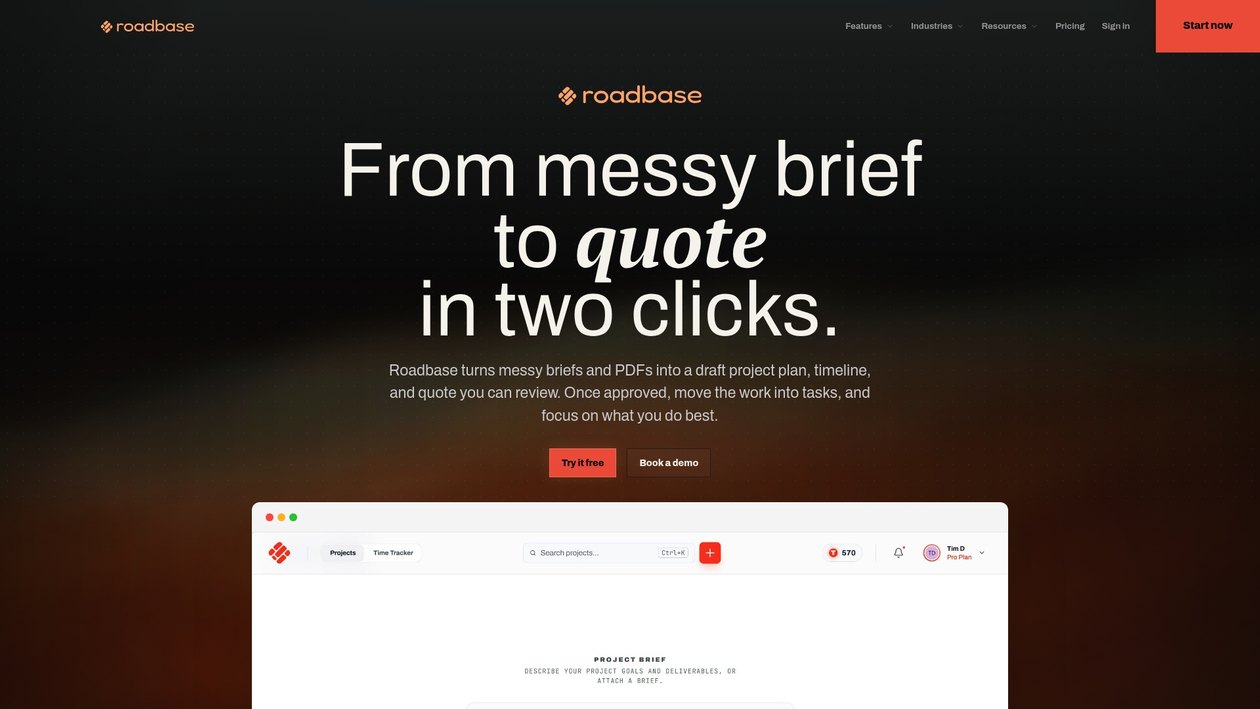
Start with 5-10 representative briefs. Choose which briefs you want to turn into editable AI drafts, allowing 10 tokens for each one. Then choose where a separate AI expense run would be useful, adding 5 tokens for each selected run. Review and adjust every AI output before using it in your plan.
For the rest of the pilot, use token-free options where they fit: build a plan manually, or duplicate and edit an existing plan. That gives you a practical mix of fresh drafts, reuse, and manual work. If you want more AI actions after using the available balance, top up independently.
This companion article about AI agency workflows is retained as further reading only. Visit Roadbase with a real brief, review and adjust the draft, and choose an AI expense run when it is useful.
Sources
- Manage Copilot Credits - Microsoft Learn
- Forecasting AI credit consumption - HubSpot blog
- What Are AI Credits? How Credit-Based AI Pricing Works - Layer3 Labs
- Credits explained - Versely
- Token budget planning framework - Digital Applied
FAQ
What Are Roadbase AI Tokens?
Roadbase AI tokens are the units used for two AI actions: brief-to-project generation and the separate AI expense run. Each plan has a monthly token allowance, and unused tokens roll over from the previous month.
How Much Does One Proposal Cost in Tokens?
One brief-to-project generation costs 10 tokens. It creates an editable draft for you to review and adjust. You can build a plan manually, or duplicate and edit an existing plan, without tokens.
Do Unused Tokens Roll Over or Expire?
Unused tokens roll over from the previous month. The monthly allowance varies by plan, and each plan is designed to have enough tokens for the month.
What's the Fastest Way to Cut Token Spend?
Manual planning and duplicating and editing an existing plan do not use tokens. Choose a fresh AI draft when it is useful, and use manual or duplicate-and-edit work for plans that do not need that AI action. Further reading is retained from the source as a companion link only.
How Often Should I Check My Token Usage?
The AI expense run is separate from brief-to-project generation and costs 5 additional tokens. Either action can repeat while your balance remains, and tokens can be topped up independently when you want more AI actions.