

Creative Agency Software: Test the Quote-to-Delivery Handoff
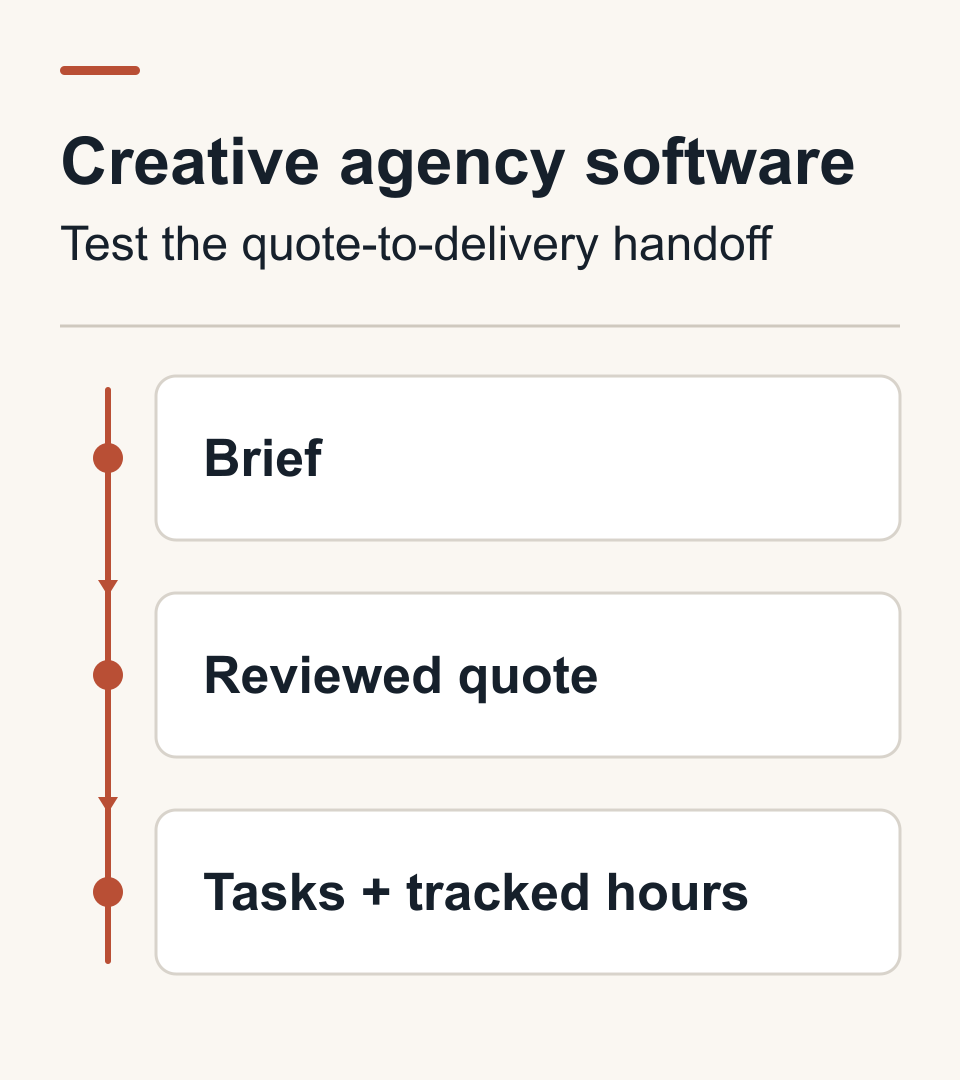
A packaging brief can look tidy in a proposal and still unravel at kickoff. The client asks for an identity system, six SKU adaptations, print-ready artwork, and two review rounds. The quote assigns hours to strategy, design, and production. A week after approval, someone has to turn those promises into tasks. If the team has to rebuild the plan, the link between priced work and delivered work is easy to lose.
The best creative agency software for that team is the one that makes this handoff inspectable. Take a real brief through an editable estimate, a reviewed quote, an approved project plan, and tracked hours. The result will tell you more about fit than a category ranking.
TL;DR:
- Use one real creative brief to see whether deliverables, review rounds, role hours, and outside costs survive the move from quote to project.
- Treat an AI-generated work breakdown as a first draft. Check omissions, assumptions, and the price before it goes to a client.
- After approval, compare task hours with the hours you priced. The difference is useful evidence for this job and the next estimate; it doesn't correct itself.
- Test specialist needs separately, including signatures, asset approvals, accounting, and portfolio-wide planning.
- With Roadbase, you can bring a brief or PDF, review an editable plan and quote, export a proposal PDF, and keep approved work connected to tasks and tracked time.
Table of Contents
- What makes software fit a creative team?
- How should you evaluate the handoff?
- Which features make the estimate easier to test?
- How does Roadbase handle this workflow?
- How do you pilot it on a real job?
- What should the software budget cover?
- How should you check client-data handling?
- What should a distributed team test on mobile?
- How do the quote and delivery plan stay connected?
- What decision should the test answer?
- Try the handoff with Roadbase
- How to read the supplementary sources
- Sources
- FAQ
What Makes Software Fit a Creative Team?
Start with the job your studio quotes repeatedly. For the packaging brief, that means deciding what six SKU adaptations include, who supplies final copy and dielines, how proof changes are handled, and whether printer coordination is inside the fee. Software is useful when those decisions appear in the plan the team can actually deliver, with enough detail to check the hours behind the price.
A studio that mainly needs a signing workflow may choose a specialist proposal tool. One coordinating many teams and future capacity may need broader planning software. If the problem sits between estimating and delivery, test that connection directly. Team size alone won't tell you which category fits.
Use an existing quote and its delivery record as a comparison. Which assumptions were explicit? Where did production time grow? Did outside costs land in the estimate? These are practical questions a demo project cannot answer for you.
How Should You Evaluate the Handoff?
Put the same packaging brief into each candidate workflow. Keep its awkward details: six SKUs, two concept routes, two review rounds, a printer proof, and a freelance illustrator's fee. Then follow the record from first plan to final time entry.
Check the stages in order:
- Draft the work. Can you see strategy, concept development, rollout, production artwork, and proofing as separate phases or tasks? An AI draft is useful only after someone who knows the job checks what it missed.
- Price the same work. Can you inspect hours by role, the illustrator's cost, overhead, contingency, and the quoted price beside the work breakdown? The calculation is only as good as the rates and costs you enter.
- Send a reviewed proposal. Does the client-facing output reflect the version the team approved internally? Record how client acceptance happens; a proposal PDF and a signature workflow are different things.
- Begin delivery. Can the producer find the approved tasks and estimated hours without transcribing them from the PDF?
- Compare actual time. Once artwork and proofing begin, can the team see tracked task hours against the estimate? That comparison signals where to investigate; it doesn't settle whether a change is billable.
Ask vendors to demonstrate any separate need your studio has, such as creative-asset approvals or an accounting connection, using the current plan you would buy. Reviews of vendor plans are supplementary reading; current vendor terms and your own workflow test should settle the choice.
Pro tip: Bring the brief that caused the most rework last month. A clean sample hides the questions that matter.
Which Features Make the Estimate Easier to Test?
For the packaging job, the useful feature is the one that exposes a decision before the quote goes out or a difference while delivery is underway.
- Editable work breakdown. A phase list should make the six SKU adaptations and proofing support visible. If the draft groups them under "design," the producer needs to split and revise it.
- Role hours beside costs. Strategy, design, production, and specialist work can have different internal costs and billable rates. Enter the studio's real figures, then inspect the quote rather than trusting a default.
- Explicit review boundaries. Write down the two included rounds and what happens when new copy, a new SKU, or another proof arrives. The software can hold this assumption; the agency still decides how to handle a change.
- Proposal output from the reviewed plan. Compare the exported PDF with the estimate and the client's brief before sending it.
- Task time against planned hours. If production artwork takes longer than priced, the variance is visible while the job is active. Discuss the cause with the team before applying it to another quote.
Different agencies may weight other features more heavily. A video studio might test crew expenses and edit versions; a brand studio might test approval rounds and identity rollout. A cross-team resource planner is a separate requirement. No utilization percentage can establish a universal fit for all of them.
How Does Roadbase Handle This Workflow?
Roadbase starts with pasted brief text or an attached PDF. It generates an editable first draft of phases, tasks, roles, estimated hours, and timing. For the packaging brief, the producer can check whether production artwork and printer proofing are separate from concept work, then adjust the draft before pricing it.
The reviewed work breakdown sits with a visual plan and role-based estimate. The team can review rates, labor, overhead, direct costs, contingency, and target margin. Those fields make the pricing assumptions visible. They don't know the studio's costs unless someone enters and maintains them.
Roadbase exports the reviewed plan and quote as a proposal PDF. Once the client approves the work through the agency's own process, the project can continue with task and project statuses. Time recorded against a project or task can be compared with estimated task hours. That is the continuity to test: can the producer point from a promised SKU adaptation in the quote to its task and actual time?
With relevant past task-time data, estimate-versus-actual history can inform a later draft. The team still reviews that draft and sets the final price. Roadbase is a fit to investigate when the quote and delivery plan should share the same underlying work; it doesn't need to replace a specialist system whose job is client signatures or creative-asset review.
How Do You Pilot It on a Real Job?
Use one packaging job you are already allowed to quote. Keep the existing estimate as a reference and have the person who will produce the work review the new draft. This is a small test of continuity, not a prediction about win rate.
- Capture the original brief. Include deliverables, SKU count, supplied assets, decision-makers, review rounds, and any outside specialist or printer costs.
- Review the draft with the delivery lead. Correct missing production steps, optimistic hours, ambiguous approval points, and assumptions about supplied copy or dielines.
- Compare the quotes. Look at role hours and direct costs beside your usual estimate. Write down why the two differ before deciding which price to send.
- Check the proposal. Export the reviewed version and confirm that the PDF tells the same story the team agreed to deliver.
- Follow the approved work. As the job proceeds, record time on its tasks and compare actual hours with the estimate. If proofing expands, note whether the cause was a missed estimate, new client input, or internal rework.
Measure your own prep time if speed matters to you. The more valuable observation is whether the approved quote remains understandable when production starts. Repeat with another type of brief only after you know what this job revealed.
What Should the Software Budget Cover?
Set a budget around the work you expect the tool to carry. Count the people who will prepare and review estimates, the number of active jobs, the proposal exports you need, and any separate signing, asset review, accounting, or reporting tools you will keep. Read current plan terms before assuming a capability is included.
For Roadbase, compare the current pricing page with your intended project count and export needs. Plan names, limits, and prices can change; a fixed monthly amount in an imported article is a poor basis for a buying decision.
During the pilot, record the effort to prepare and revise one quote and the gap between planned and tracked hours. That gives you a local basis for judging value. It doesn't prove that buying software will recover a particular amount of profit or improve a win rate.
How Should You Check Client-Data Handling?
The packaging brief may contain unreleased product names, commercial terms, or artwork. Before uploading it, ask the vendor how access is controlled, how long data is kept, how deletion works, and whether the arrangement meets your client obligations. Ask who on your own team should see internal rates and quoted prices.
The practical output is a short list of data-handling questions for each vendor and your client. If the live brief is confidential, use a cleared brief for the first test.
What Should a Distributed Team Test on Mobile?
Ask the producer to do an ordinary task away from the desk: check a project's status, update a task, or record time after a printer call. Confirm that the change appears where the rest of the team works. Then test any other phone task your process truly requires on the current app and plan.
Keep proposal review, creative-round approval, and detailed pricing as separate test cases. A mobile access claim alone does not establish that those actions work on a phone. For a distributed team, also decide where the client approves artwork and where the producer records that decision, so a status update does not get mistaken for formal approval.
How Do the Quote and Delivery Plan Stay Connected?
Take the quoted production-artwork hours as an example. They should belong to tasks the producer can identify after approval: prepare the first SKU, adapt the other five, review printer proofs, and make included corrections. If a quote says only "packaging design," no tool can infer which of those activities the fee covered.
The connection is useful when it survives a normal change. Suppose the client adds two SKUs after the first proof. The producer can look at the original deliverables and hours, identify the new request, and discuss a revised plan or fee. When time is logged to the work, the team can compare what was estimated with what happened. A variance is a prompt for judgment, not automatic scope control.
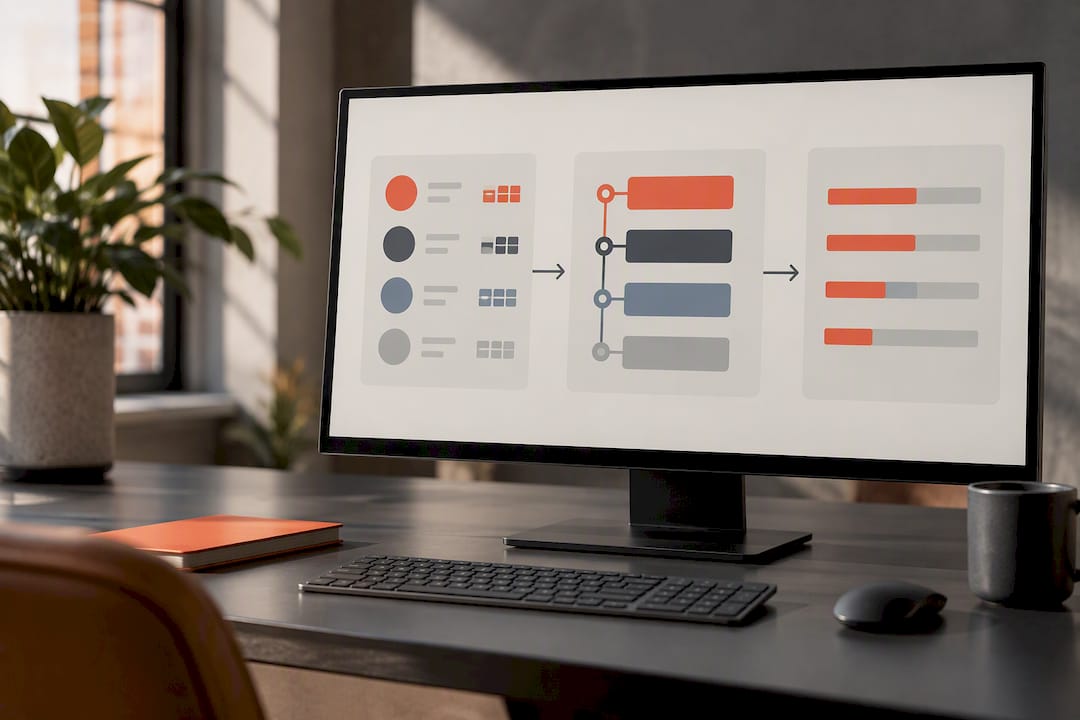
For a retainer, run the same check each cycle: which deliverables were priced, which tasks were actually done, and which hours belong to the next agreement? A connected plan makes that conversation easier to prepare.
What Decision Should the Test Answer?
At the end of the packaging job, ask whether the reviewed quote remained useful to the people doing the work. Could the producer find the promised deliverables and hours? Could the owner see what changed without rebuilding the estimate? Did actual task time help explain the next quote?
If those answers matter most, a quote-first workspace deserves a closer look. If the hard part is signing, client asset approvals, accounting, or forecasting people across a portfolio, test a tool built for that job. The software decision should follow the work your team needs to do next.
- Nicolas Robertson
Try the Handoff With Roadbase
Bring your next real creative brief or PDF to Roadbase. Review the editable phases, role hours, costs, and quote against what your team expects to deliver, then export a proposal PDF when the plan is ready. If the work is approved, keep those tasks connected to status and tracked time so the next estimate has a better reference point.
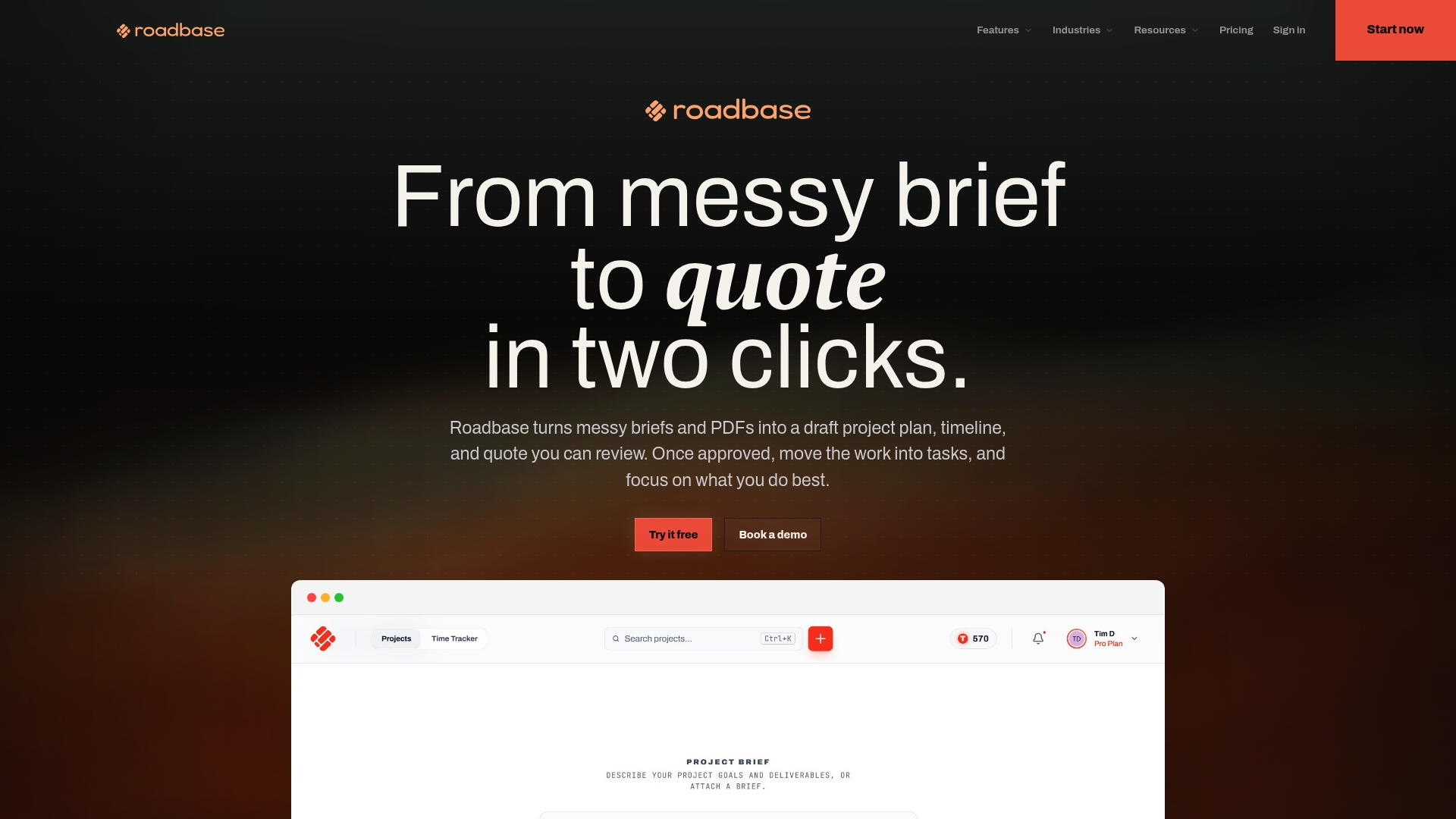
For a small studio or solo practice, the freelancer use cases show where this brief-to-quote workflow can fit. Use your own deliverables and review rounds for the test; that will show you whether the plan is useful after the proposal leaves your desk.
How to Read the Supplementary Sources
Agency benchmarks, utilization advice, AI timeline claims, and vendor reviews can suggest questions to ask. None can show whether your packaging quote will stay connected to delivery. Check a source's methods, date, and current product terms before applying its conclusions to your studio.
Sources
- State of Agencies 2026: Report & Benchmarks
- Creative agency pricing commentary
- Billable utilization discussion
- AI project timeline discussion
- monday.com review
FAQ
What is the best creative agency software for quoting and delivery?
The best fit is the tool that carries your actual deliverables, role hours, costs, and review assumptions into an approved work plan you can track. Test one real brief. If the main job is signatures or broad resource planning, evaluate that workflow directly rather than choosing by a category label.
What should a creative studio compare during a pilot?
Compare the first draft with the studio's existing estimate, then check the reviewed proposal against the approved work. During delivery, compare tracked task hours with planned hours and record why they differ. The pilot should tell you whether the handoff is clear to the people who produce the work.
Can software approve a creative brief or proposal for the client?
A proposal PDF gives the client a document to review. Confirm the client's actual acceptance and any signature requirement in the process you use. Likewise, record creative-round approvals where the team can find them; task status alone is not the approval record.
Can a producer review and approve proposals on a phone?
Test the specific mobile actions your producer needs in the current product. Status checks and time entry are useful examples to try, but they do not establish phone-based proposal review or client approval. Keep the detailed quote review in the workflow that supports it.
Which Roadbase plan should a small agency choose?
Start with the current plan comparison and check your expected active projects, proposal exports, and usage needs. Try a real brief before choosing a paid tier. The right plan depends on the work you will actually put through it.