

Six Step AI Project Scoping Playbook for Freelancers and Small Teams
AI can turn a messy client brief into a first draft of a work breakdown. It can suggest phases, tasks, roles, estimated hours, timing, and the questions still missing from the brief. The useful work happens next: review the draft, adjust it against the actual job, and build a quote that reflects the inputs you have confirmed.
TL;DR:
- A clear brief gives an AI draft something specific to work from; exploratory work needs more conversation before its shape is clear.
- Review deliverables, assumptions, inputs, approvers, roles, hours, timing, and the quote before export.
- Use a repeatable brief checklist and mark missing information for follow-up rather than treating a generated draft as complete.
- Compare tracked hours with the estimate to make differences visible while the work is underway.
- Make the next item to review concrete when a brief changes: the deliverable, input, review round, or timing assumption involved.
Table of Contents
- When to Use AI for Scoping and What It Won't Replace
- Six-Step AI-Assisted Scoping Workflow to Turn a Brief Into a Priced Proposal
- Build the Scoping Documents: Brief Fields and a Four-Part SOW Scaffold
- Pricing Models and Packaging: Pick the Model That Fits the Work
- Prevent Scope Creep and Use Change Orders as a Revenue Mechanism
- Configure AI for Reliable Scoping: Persistent Context, Templates, and Vetting Rules
- Measure Estimate Accuracy and Tighten the System
- Defining Project Objectives and Success Criteria for AI-Scoped Work
- Key Stakeholder Identification and Engagement During Scoping
- Technical Feasibility Assessment and Data Availability Analysis
- Risk Assessment for AI-Involved Creative Work
- Aligning AI Project Scope With Client Strategy and Compliance
- Author's Perspective: Start Small With AI Scoping
- Go From Brief to Priced Proposal With Roadbase
- Sources
- FAQ
When to Use AI for Scoping and What It Won't Replace
AI-assisted scoping is most useful when a brief already names recognizable outputs: a brand refresh, a website redesign, or a video package with a known set of versions. Those details give the draft a place to begin. Open-ended strategy or discovery work can still benefit from a draft, but the team may first need a smaller conversation to clarify the questions, available inputs, and possible next phase.
Human judgment stays central. Someone still needs to decide whether the brief describes the intended work, whether its assumptions are useful, who should review it, and what information is still unknown. A logo project might name concept routes, formats, and review rounds. A positioning engagement may begin with questions that are better explored before anyone turns them into estimated tasks.
Six-Step AI-Assisted Scoping Workflow to Turn a Brief Into a Priced Proposal
The sequence is simple: capture the brief, draft a work breakdown, review it, adjust it, and turn the reviewed inputs into a quote.
- Capture the brief: objectives, intended deliverables, timing, inputs, and the people who should review the work.
- Add context: include known assumptions, role information, prior structures that are relevant, and any unanswered questions.
- Draft a work breakdown: ask for phases, tasks, roles, estimated hours, timing, and a clear list of missing inputs.
- Review the draft: check that the tasks match the actual deliverables and that the assumptions make sense for this job.
- Adjust the plan and quote: revise the roles, hours, timing, labor, overhead, direct expenses, contingency, and target margin as appropriate for the work.
- Discuss the reviewed plan with the client: identify what needs confirmation and record the next revision when the brief changes.
Pro Tip: Treat generated hours as a starting point for review, not a number to copy into a quote.
Roadbase's work breakdown structure workflow offers related context on moving from a creative brief toward a scoped project and estimate.
Build the Scoping Documents: Brief Fields and a Four-Part SOW Scaffold
A usable creative brief can name the project context, objectives, audience, intended outputs, client inputs, review points, and people involved. A creative brief template is useful background reading when you need a prompt for those fields. The point is not to reach a fixed length; it is to have enough specific information to review the next draft together.
A working scope description can use four practical parts:
- Overview: the project context and what the team is trying to make.
- Named deliverables: describe the formats, variants, or assets instead of relying on a broad label.
- Known inputs and boundaries: record what the client will provide and the assumptions the draft relies on.
- A change discussion: when a request adds work or changes an input, write down the requested change and review its effect on the plan.
That background framework can help a team compare its wording. In the project itself, the useful result is a clearer description of what needs review next.
Pro Tip: Make outputs concrete. "Social content" leaves many decisions open; a list of specific post formats and versions gives the team something to review.
Pricing Models and Packaging: Pick the Model That Fits the Work
The pricing model should fit how much of the brief is known. A bounded set of deliverables may suit a fixed fee. Work that is still changing shape may call for a different commercial conversation. The important editorial point is not that one model wins; it is that the quote should expose the assumptions behind it.
- Fixed fee: can suit a defined set of deliverables and review points.
- Time and materials: can suit exploratory or evolving work where the work is still being clarified.
- Retainers: can fit an ongoing relationship with a recurring pattern of work.
- Tiered options: can give a client distinct choices when each option describes a different set of deliverables or inputs.
Pricing presentation guidance is useful background reading for how to explain options.
Prevent Scope Creep and Use Change Orders as a Revenue Mechanism
The heading is familiar, but the practical work is more ordinary: name the deliverables, inputs, review rounds, and assumptions, then make a changed request visible. When a client asks for something new, write down what changed and review the affected task, timing, and quote rather than relying on an informal memory of the conversation.
- Record the requested change in plain language.
- Identify which deliverable, input, or review point it affects.
- Discuss the work needed to update the plan and quote.
- Keep the revised description with the project materials so the next review starts from the same information.
Pro Tip: A small request is still easier to discuss when both sides can point to the task or deliverable it touches.
Configure AI for Reliable Scoping: Persistent Context, Templates, and Vetting Rules
The quality of an AI draft depends on the information it receives. Give it the known brief details: project context, deliverables, inputs, roles, timing, and assumptions. Ask it to separate known information from questions that still need an answer. A creative project management workflow article offers background reading on using AI in project work; use any suggested process as a prompt for review rather than a fixed recipe.
A lightweight checklist is often enough. Before using a draft in a quote, check that it names the outputs, has not invented client inputs, identifies the roles doing the work, and makes missing information easy to find. If a brief is a PDF or a set of notes, keep the original close while you compare it with the draft.
Measure Estimate Accuracy and Tighten the System
Comparing estimated hours with tracked hours is a useful review practice. It lets a freelancer or studio see where a project took more or less work than expected and decide what to inspect in the next brief.
- Track time against the project or task.
- Compare actual hours with the estimate while the work is underway and again when it is complete.
- Note the task types, missing inputs, or assumptions that deserve attention in a later brief.
- Reuse the observations as questions for the next draft, with a human review of whether they apply.
Roadbase is publicly positioned around turning creative briefs into scoped projects, estimates, and trackable delivery plans.
Defining Project Objectives and Success Criteria for AI-Scoped Work
Give the brief an objective that explains why the work is being commissioned. "Redesign the homepage" identifies a deliverable area; a clearer objective says what the client hopes the redesign will support. That context helps a team assess whether the phases and tasks belong in the first draft.
For each major deliverable, describe what the team will review: the required format, version, available input, or decision point. This is a working checklist, not a forecast of a business result. If AI contributes to the delivery work itself, identify where the team will review that output and what source material it needs.
Key Stakeholder Identification and Engagement During Scoping
Ask early who will provide information, who will review work, and who can answer questions about the brief. Those roles may belong to different people. A day-to-day contact may supply content while another person reviews a concept or provides a technical input.
Put the names and review points where the team can see them while it drafts the plan. If someone important has not seen the brief, mark that as a question rather than assuming a draft already reflects their view. AI can organize notes into a suggested stakeholder list, but the names and responsibilities still need a real conversation.
Technical Feasibility Assessment and Data Availability Analysis
Before estimating work that depends on client-supplied material, list what exists, what condition it is in, and what is still needed. Brand guidelines, source files, footage, content, technical access, or product information can all change the shape of a plan when they are incomplete.
This is especially helpful when a draft depends on a client's own material. Rather than assume a file, data set, or asset is ready, add the missing item to the brief and decide who can clarify it. The draft becomes more useful when it makes those dependencies visible.
Risk Assessment for AI-Involved Creative Work
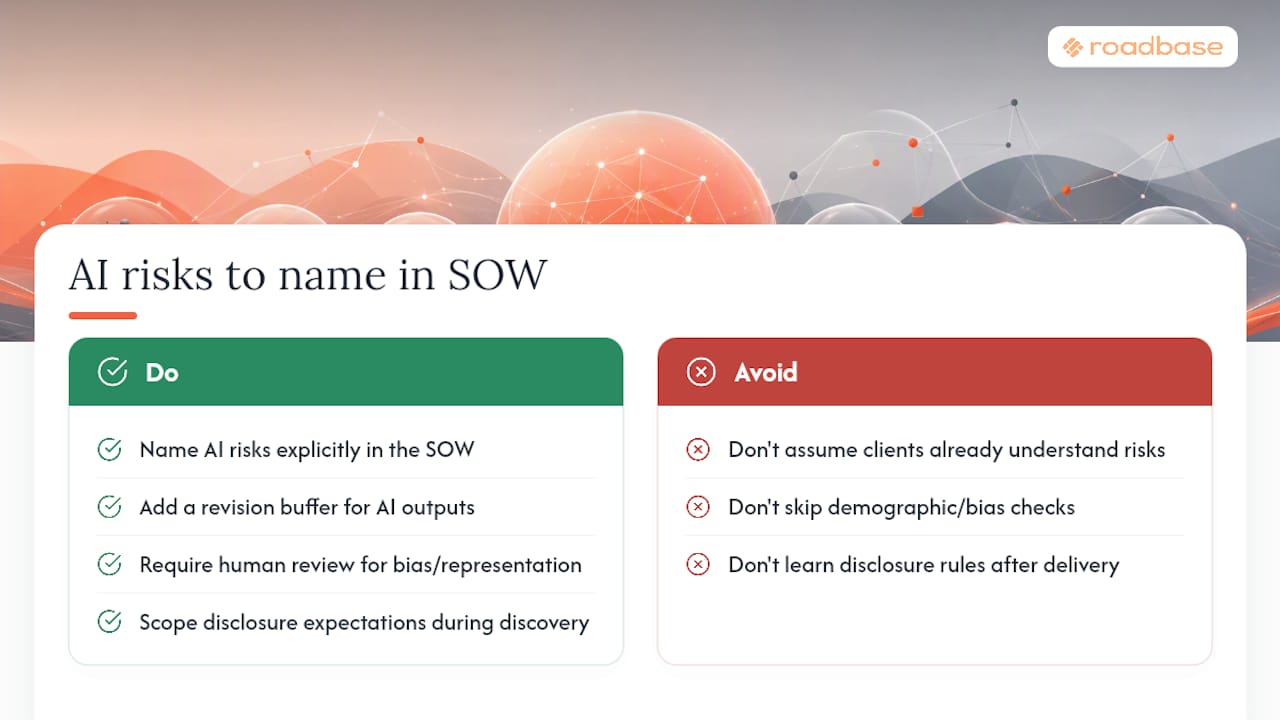
When AI contributes to the delivered work, review the output for the task it is meant to serve. A copy draft, image, or video element may need a different review than a project plan. Set the review point in the brief, identify the source material that informs it, and make room to adjust the work when the output does not fit.
For creative teams, a short list of questions is often enough: What is the AI helping with? Who will review the result? Which client inputs matter? What needs to be checked before this output moves to its next stage? Keep those questions close to the deliverable rather than treating them as a generic checklist.
Aligning AI Project Scope With Client Strategy and Compliance
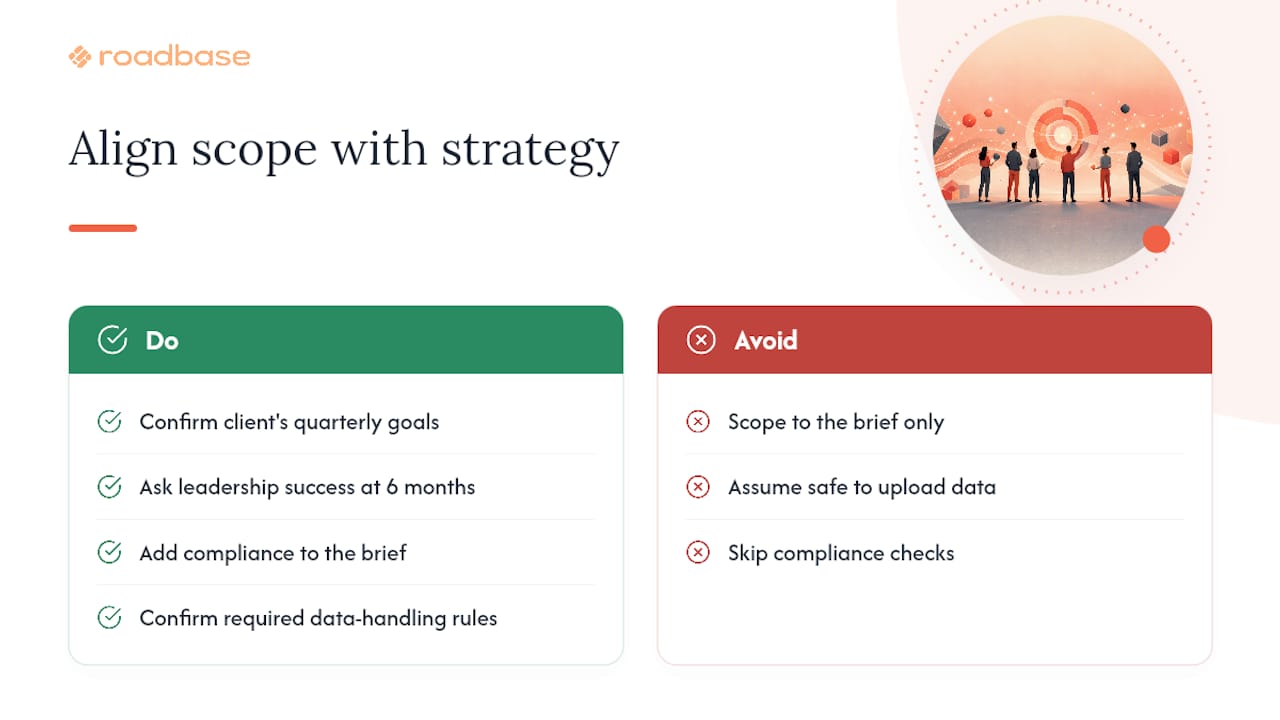
Before the team turns a brief into tasks, ask what the client is trying to accomplish and which decisions the work should support. That conversation can reveal a missing deliverable, an unclear input, or a stakeholder who needs to weigh in before the plan is reviewed.
Some projects arrive with organization-specific review or approval requirements. Identify the people and information that need to be considered, then keep those items visible in the brief. A planning draft can organize the work around those inputs, but it does not replace the client conversations needed to settle them.
Author's Perspective: Start Small With AI Scoping
Start with a repeatable kind of project and one real brief. Review the generated work breakdown by hand, compare the tracked work with the estimate, and use what you observed as a question for the next brief. The value is in the habit of inspecting the work, not in expecting a draft to improve on its own.
- Nicolas Robertson
Go From Brief to Priced Proposal With Roadbase
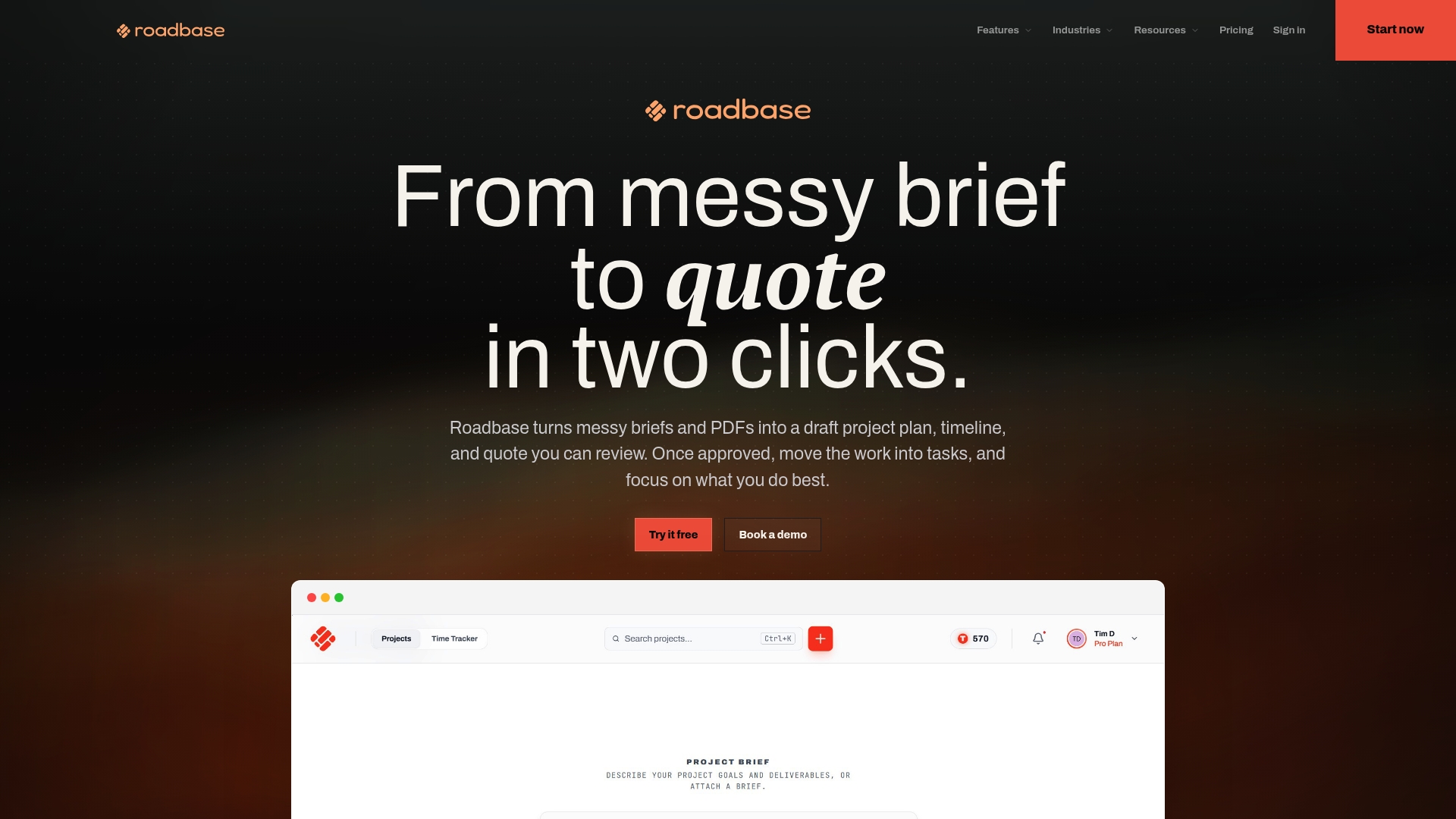
If you have a creative brief that needs a clearer next step, Roadbase is built to help turn it into a scoped project, an estimate, and a trackable delivery plan. Explore Roadbase with your next brief at Roadbase.
If you are rebuilding the same spreadsheet for every new client, the freelancer-focused workflow provides related context on creative briefs, scoped projects, estimates, and trackable delivery plans. For similarly structured technical engagements, see the software consulting page.
Sources
For additional reading on briefing, pricing presentation, and AI-assisted project work, see the AI content brief guide. Roadbase's messy brief to clean quote workflow and scope of work template offer related planning examples. The external sources below are retained background reading, not universal rules for a particular job.
- SOW framework background
- Creative project pricing guidance
- Creative brief template
- AI creative project management workflow
FAQ
What Is AI Project Scoping for Creative Work?
It is the use of AI to draft a work breakdown from a client brief. The freelancer or team then reviews and adjusts the phases, tasks, roles, estimated hours, timing, assumptions, and quote before exporting a proposal PDF.
How Accurate Are AI-Generated Hour Estimates?
They are draft inputs to review. A clear brief gives the draft more useful detail, but the team still checks the work breakdown, roles, hours, timing, assumptions, and quote against the actual job.
What Should Always Stay Out of a Fixed-Fee SOW?
Keep the description specific about the deliverables, known inputs, and review points. When a request changes those details, record it and discuss the update to the plan and quote with the client.
How Can Roadbase Support a Creative Brief?
Roadbase is publicly positioned to turn creative briefs into scoped projects, estimates, and trackable delivery plans.
How Often Should I Update My AI's Project Context?
Use the next brief as an opportunity to review what the prior estimate missed. Compare tracked work with the estimate, then decide which observations are relevant enough to include as context for a new draft.
Recommended
- Proposal Writing With AI: A Workflow That Actually Works
- Software Integration Project Scope: How to Estimate and Quote the Work
- Proposal Timelines for Agencies and Freelancers
- From messy brief to clean quote: a practical workflow for freelancers and agencies
- How AI tokens work in Roadbase
- Project roadmap tools for creative teams
- GanttPRO alternatives for planning projects